Microcurrent Facial Nourishment: How Peptides, Gentle Electrical Current, and Facial Muscle Stimulation Work Together to Lift and Revitalize the Skin
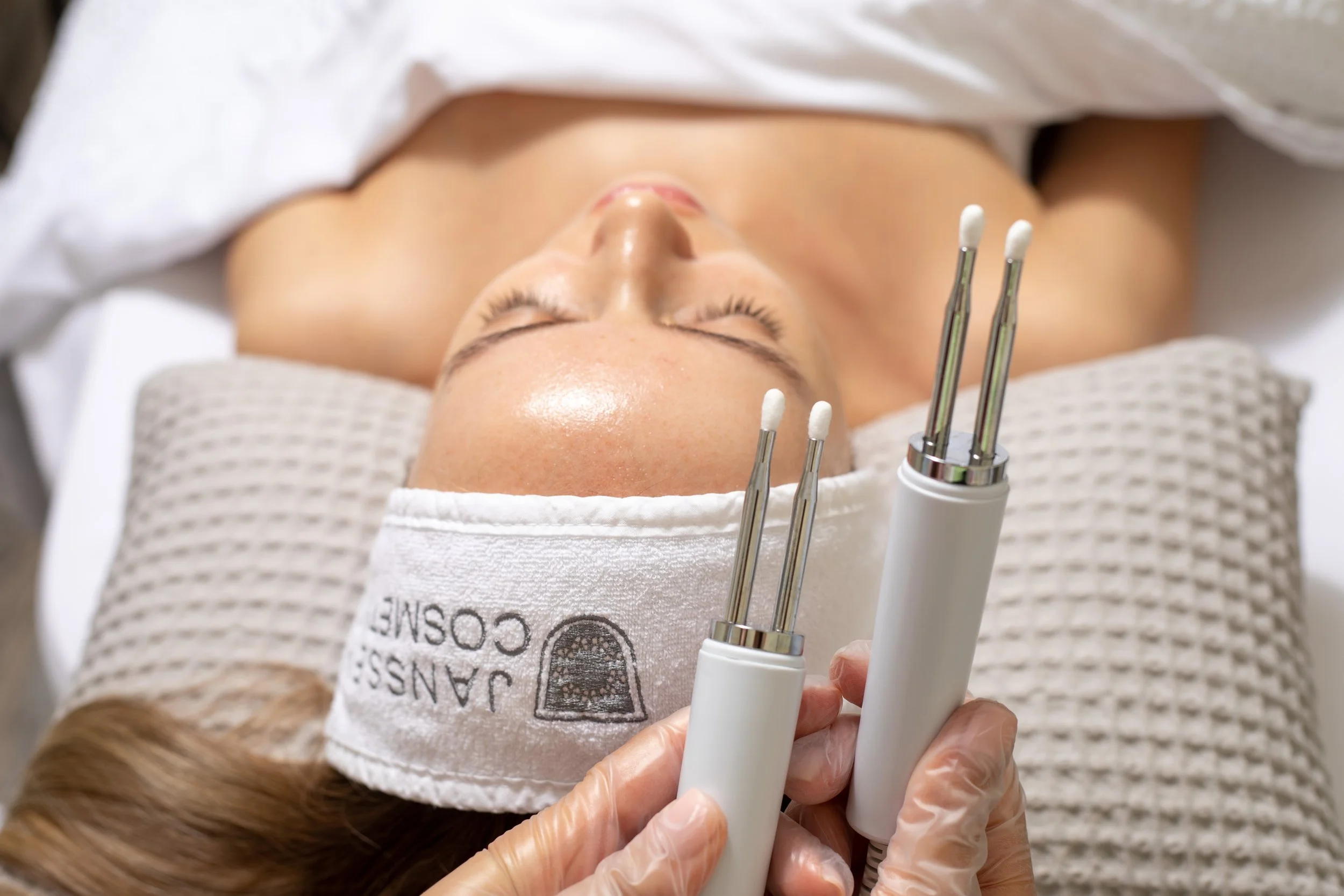
If your skincare routine is consistent but your face still looks tired, puffy, or less defined, the issue is often not the quality of your products—it’s how the skin receives and responds to them.
As we age, skin doesn’t just lose collagen. Facial muscles lose tone, circulation slows, and the skin barrier becomes more selective. Even advanced peptide serums may sit on the surface without fully interacting with the skin in a meaningful way.
This article explains how microcurrent facials paired with peptides work, why the treatment is often described as an “IV drip” for the skin, and who benefits most from this advanced, non-invasive approach to lifting and skin vitality.
At Beyond Skin by AS, located at 1286 Mark St, Bensenville, IL 60106, microcurrent facials are designed for clients who want visible refinement, nourishment, and lift—without needles or downtime.
What Is a Microcurrent Facial?
A microcurrent facial uses very low-level electrical current delivered through probes or conductive gloves to support a refreshed, firmer, and more lifted-looking appearance. In aesthetics, microcurrent is commonly used to stimulate facial muscles and support visible toning and contour refinement.
Beyond skincare, microcurrent has also been researched in clinical settings for its role in tissue repair and recovery applications. A systematic review published in the Journal of Tissue Viability examined microcurrent stimulation therapy in wound-healing contexts, highlighting its influence on biological processes related to tissue recovery.
https://www.sciencedirect.com/science/article/abs/pii/S0965206X21001327
https://pubmed.ncbi.nlm.nih.gov/34903470/
This clinical background helps explain why microcurrent is often described as restorative or supportive in professional skincare treatments.
Why Skin Can Look “Aged” Even With Good Skincare
Skin aging is not only a surface issue. Over time, several changes happen at once:
Facial muscles lose tone and appear less lifted
Circulation and lymphatic flow slow, contributing to puffiness
Cellular energy processes become less efficient
The skin barrier becomes more selective
This is why many people feel that topical skincare alone no longer delivers the same visible results. Microcurrent addresses both the muscle and skin components of aging, making it especially effective when paired with peptide-rich formulations.
The Nourishing and Supportive Aspect of Microcurrent
Microcurrent is often described as “nourishing” because of its relationship to cellular activity. One frequently cited foundational study by Cheng et al. explored how specific microamp-level electrical currents influenced ATP (adenosine triphosphate) levels in tissue. ATP plays a central role in cellular energy and normal biological function.
Foundational study reference (PubMed):
https://pubmed.ncbi.nlm.nih.gov/7140077/
In professional skincare, this research is referenced to explain why skin treated with microcurrent often appears more responsive, energized, and revitalized. Rather than forcing change, microcurrent works by supporting the skin’s natural processes.
The Role of Peptides in a Microcurrent Facial
Peptides are short chains of amino acids commonly used in skincare to support:
Firmer-looking skin
Smoother appearance of fine lines
Improved resilience and texture
However, peptides vary in size and structure, and the skin’s barrier is designed to limit penetration. This is why professional formulation and treatment techniques are critical.
When peptides are applied during a microcurrent facial using a water-based, conductive serum, they are introduced at a moment when the skin and facial muscles are most receptive.
How Peptides Are Introduced During Microcurrent: Iontophoresis Explained
When low electrical current is applied alongside a conductive serum, it can support a process known as iontophoresis—a technique that uses mild electrical current to enhance the movement of charged, water-soluble molecules across the skin barrier.
A well-established review on iontophoresis-based transdermal delivery explains that this method has been studied for transporting hydrophilic molecules, including peptides, under controlled conditions.
https://pubmed.ncbi.nlm.nih.gov/12408738/
More specifically, research published in Nature Biotechnology examined the transdermal delivery of peptides using iontophoresis, demonstrating that electrical current can assist peptide transport depending on molecular properties and treatment parameters.
https://www.nature.com/articles/nbt1296-1710
https://pubmed.ncbi.nlm.nih.gov/9634857/
In a cosmetic facial setting, this does not mean peptides are injected or forced deep into the skin. Instead, current-assisted techniques may help optimize how peptide formulations interact with the skin during treatment.
“IV Drip for the Skin” Analogy
The “IV drip” concept is an analogy, not a medical claim.
An IV drip delivers supportive nutrients efficiently when the body is ready to receive them. In a cosmetic sense, a microcurrent + peptide facial is similar:
Peptides = the nourishment
Microcurrent = the delivery support + activation
Muscle stimulation = the “wake-up” signal that creates lift
So the treatment feels like:
“My face looks lifted and hydrated—as if it was fed.”
The best version of this analogy is results-focused but honest:
It supports ingredient interaction
It supports muscle tone
It doesn’t pretend to be an injection
Microcurrent as Anti-Aging + Lifting: Why You See Results
1) Facial muscle stimulation for visible lift
Microcurrent can support a more lifted look by stimulating facial muscles and improving tone patterns in areas like the brow, cheeks, and jawline.
2) De-puffing + refined contour
Many clients see reduced puffiness and sharper definition because the skin looks less congested and more “awake.”
3) Skin vitality support over time
With consistency, microcurrent can support a healthier-looking baseline: smoother texture, better bounce, and a more refined tone.
Who Is a Good Candidate for a Microcurrent + Peptide Facial?
This treatment is ideal for individuals experiencing:
Early to moderate facial laxity
Puffiness or loss of definition
Dull or tired-looking skin
Fine lines related to muscle tension
Microcurrent may not be suitable for individuals with implanted electronic devices (such as pacemakers), certain neurological conditions, or during pregnancy. A consultation is always recommended.
Microcurrent Facials at Beyond Skin by AS | Bensenville, Illinois
At Beyond Skin by AS, microcurrent is performed as a precision facial—not a generic add-on. Our studio in Bensenville, Illinois serves clients from the surrounding Chicago suburbs who are seeking advanced, non-invasive solutions for lifting, muscle toning, and skin revitalization without downtime.
Clients often travel from areas near Arlington Heights, O’Hare Airport, Elmhurst, Elk Grove, Schaumburg, Glenview, Wood Dale, Mount Prospect, and the greater Chicago suburbs for treatments that combine science-backed techniques with refined, results-driven care.
Experience Microcurrent + Peptide Nourishment
If you’re looking for a non-invasive treatment that supports visible lift, facial toning, and overall skin vitality, a microcurrent facial may be the right next step.
At Beyond Skin by AS in Bensenville, IL, each session is customized with advanced technique, muscle mapping, and peptide-forward conductive formulations designed to leave the skin looking sculpted, hydrated, and refreshed—without needles or downtime.
When you’re ready, explore or schedule your microcurrent facial treatment.
References
Microcurrent stimulation therapy and wound healing – Journal of Tissue Viability
https://www.sciencedirect.com/science/article/abs/pii/S0965206X21001327
https://pubmed.ncbi.nlm.nih.gov/34903470/Effects of microampere electrical currents on ATP and cellular processes – Cheng et al.
https://pubmed.ncbi.nlm.nih.gov/7140077/Iontophoresis-based transdermal delivery systems – Review
https://pubmed.ncbi.nlm.nih.gov/12408738/Transdermal delivery of peptides by iontophoresis – Nature Biotechnology
https://www.nature.com/articles/nbt1296-1710
https://pubmed.ncbi.nlm.nih.gov/9634857/